Showing posts with label Christian education. Show all posts

Tuesday, 28 August 2012

Formative Education

The latest issue of Case magazine is out with the theme ‘Formative Education’. I introduce the issue by asking whether we have too small a vision of Christian education. John Hull has suggested that ‘what normally passes for Christian education can be more accurately named Christians educating’. (i) This strikes a chord with me and has been the foundation of a nagging concern I’ve had for many years. For I have observed many godly people building and sustaining schools that are good educational institutions, but which are hard to differentiate from good secular schools. I suggest that authentic Christian education should be different.

I anticipate the obvious response is, "so what should it be like"? and offer a response by making a case for the view that "Education is nothing other than the whole of life of a community, and the experience of its members learning to live this life from a particular standpoint".

This simple definition has two major propositions that I use to frame my essay. First, education is about the ‘whole of life’ of a community, not just the mandated curriculum or that which occurs in planned lessons. Much occurs within the ‘cracks’ or ‘peripheral spaces’ of daily life. Second, participants ‘learn to live this life’ together with others under the influence of a particular standpoint that shapes community life. My argument is that the role of Christian teachers and schools is to nurture, inspire, form and influence for good the children God gives them. Our chief task should be to create contexts for educating children that assist students’ formation as learners, mature humans, communicators, people who work, people who can cope in community as knowers, lovers and desirers of God. As James K.A. Smith argues in the second paper in the issue, Christian education aims to form the loves and desires of students; loves and desires that, in turn, govern and generate action.

Brueghel's famous painting depicts over 200 children engaged in over 80 play activities (Wiki Commons)

I also argue in my article for a greater commitment to pedagogy. This is a pedagogy based on the view that in the day-to-day life of the school community, children learn more than curriculum content. They learn about life and faith, about beauty, loneliness, rejection, truth, humiliation, love, companionship, hate, sadness, and so on. The thing we call ‘education’ is the whole of life of a community not just curriculum, teaching methods, school discipline, or even chapel and Christian Studies. These things—which Christians have often given the greatest attention to—have not necessarily helped to create more authentic Christian classrooms and schools.

By ‘pedagogy’, I mean the way that the life of the classroom is shaped by the teacher with the participation of all others. In a sense, pedagogy is the embodiment of what we believe good research, and our biblical understanding of personhood and God’s ultimate purposes for us in Christ, would suggest we do. 

Sometimes the orchestration of the life of the school community will be dominated by curriculum in the form of method, content, assessment and so on, but always, the habits, beliefs, knowledge, dispositions, actions and words of its members will incline it towards a telos or end purpose and goal of education. An authentically Christian education needs to be evidenced by a desire to see children embrace the Kingdom of God. In the rest of the essay I discuss the way that children learn within communities of practice as they experience the life of the school. I suggest that the task of teachers is to orient themselves and the life of the school 'communities of practice' to the Kingdom of God.

The edition also has four other articles on the theme. James Smith argues, “education is nothing less than a re-narration of our identity in Christ…Christian education is a comprehensive project of rehabituation”. Such habit formation he suggests is ‘at the intersection of stories and bodies’. Education isn’t just about dissemination of information, it is more fundamentally an exercise in formation.

Dr James Pietsch offers an interesting piece in which he uses sociocultural theories, particularly Vygotsky’s, to argue for Christian approaches to classroom practice. He suggests that the Christian teacher needs to see classrooms as ‘relational spaces’, in which we seek to reshape in order to reflect the values of the Kingdom. In this way students' will experience a classroom life in which “…patterns of interaction are distinctively Christian, characterised by humility.”

David Leonard offers a different view of excellence. This is defined not in terms of success, doing one’s best, or even producing excellent work, but rather as a virtue. A virtue he defines as a “habit or disposition which is conducive for enabling one to flourish as a human being”. He considers what such a different definition of excellence might mean for education.

 Finally, Dr Dani Scarratt offers a fascinating insight into the reasons that some Christians choose to send their children to secular rather than Christian schools. She asked a group of such parents to talk about their reasons for making this decision.

If you’d like to become a CASE associate you will receive Case magazine each quarter, gain access to additional resources online and receive discounts on some of our other activities and events.

Related links

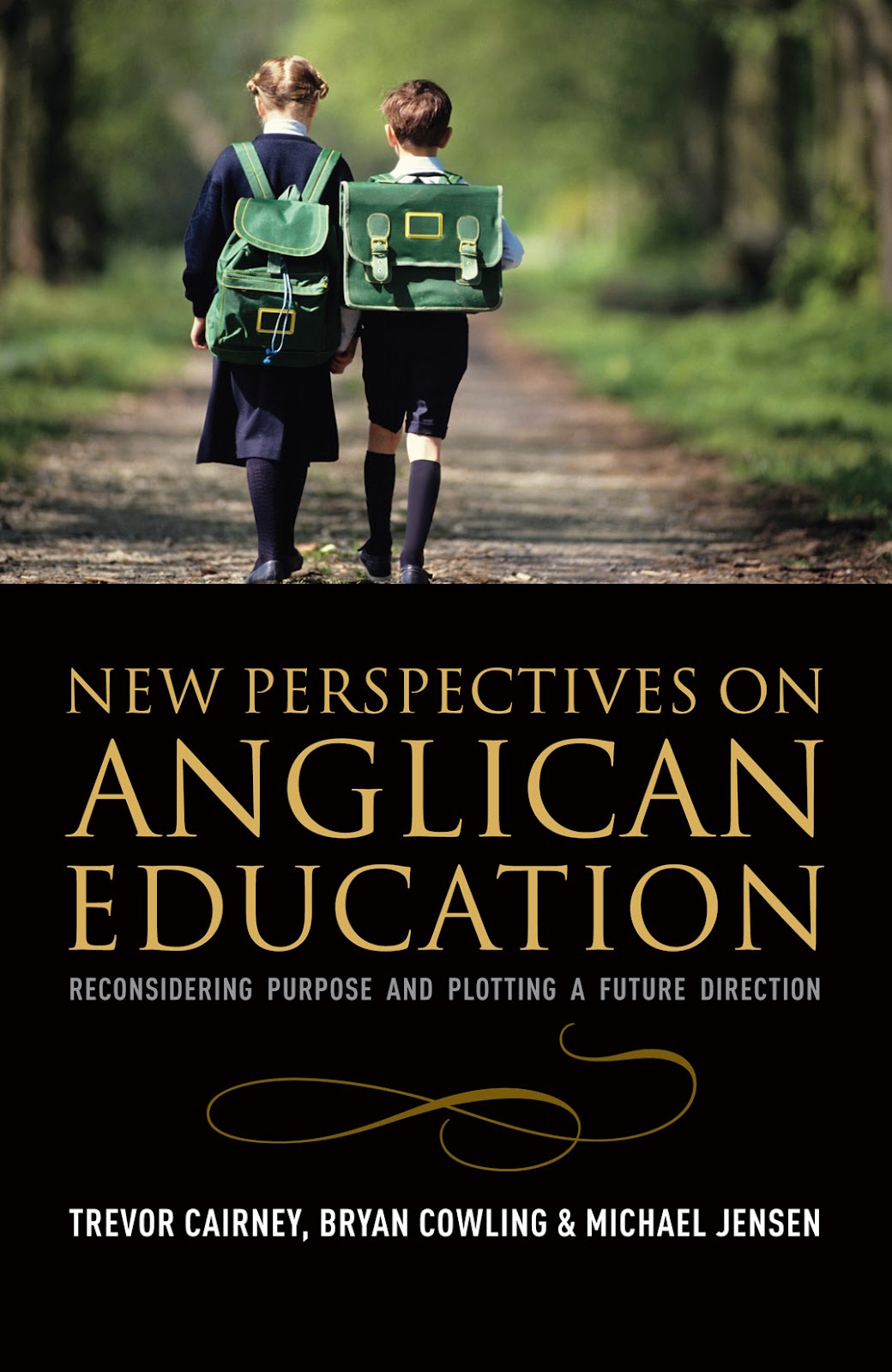
Trevor Cairney, Bryan Cowling & Michael Jensen (2011) 'New Perspectives on Anglican Education: Reconsidering Purpose and Plotting a Future Direction', Sydney: AEC (HERE)

2012 New College Lectures presented by James K.A. Smith on 'Imagining the Kingdom' (HERE)

2012 'Education as Formation' Conference (HERE)


(i) John Hull, ‘Aiming for Christian Education, Settling for Christians Educating: The Christian School’s Replication of a Public School Paradigm’. Christian Scholar Review Vol.32 (2), 2003, pp 203-223.

Friday, 22 June 2012

Education as Formation: Conference Outcomes

A major education conference was held at New College on Saturday 26th May 2012. The conference was a joint activity of CASE, the Anglican Education Commission (AEC) and the Sydney Anglican Schools' Corporation (SASC). The theme was 'Education as Formation'. Over 230 people attended to hear a number of speakers address the theme.

Professor James K.A. Smith from Calvin College spoke on ‘Educating the Imagination: Christian Education as a Pedagogy of Desire’.
Professor Trevor Cairney spoke on ‘Pedagogy and the nurturing of the child
In the afternoon four practitioners from four Sydney schools addressed the theme in relation to their own practices. The speakers were Dr James Pietsch, David Hastie, Dr Anne Johnstone & Richard Ford. All four presented separate 'Case studies in Christian Education'.

Conference Opening

Archbishop Peter Jensen opened the conference at New College (UNSW). Dr Jensen outlined his own vision for Anglican Education in the Sydney Diocese and the work of the Anglican Education Fellowship (AEF) that he initiated in 2010. He commended the work of the AEF and the book that it had published recently, 'New Perspectives in Anglican Education: Reconsidering Purpose and Plotting a Future Direction'. In doing so he reminded the Anglicans present that "we have a long way to go" in Anglican schools.

He pointed out that in spite of progress there is:

little literature devoted to discussing Anglican education;
no faculty whose business it is to research the subject;
no course devoted to explaining it;
no philosophy which encapsulates it;
no accessible theological discussion of it.

Dr Jensen expressed his impatience to see an increasing depth in discussions by Anglicans concerning the distinctives of the education offered by Diocesan schools. Having said this, he indicated how encouraged he was by the work of the AEF. In particular, he saw that the book 'New Perspectives on Anglican Education', and the accompanying 'New Perspectives' website, was a big great step forward. He is encouraged that hundreds of copies have been sold across Australia and internationally and, that a number of positive reviews have been written.  He commended the ongoing work of the AEC and his anticipation that the conference would extend the conversations and offer some answers to his questions. He concluded his talk by suggesting that education is much more than classroom instruction.

"It seems to me....that the essence of schooling is the invitation from a fellowship of learned learners to join the circle of their relationship and to fall in love with what engages them."

James K.A. Smith

Professor Smith (Calvin College) had been in Sydney to present the 2012 New College Lectures. He also presented a plenary address to the conference. He began with the suggestion that Christian education is "...nothing less than a re-narration of our identity in Christ." Christian education he argued is a process of rehabituation. That is, a formation in virtue and habit that occurs at the intersection of our stories and bodies. "We live at the nexus of story and body in such a way that sanctification is both aesthetic and kinaesthetic—both tactile and poetic". He began by framing his talk with a powerful illustration from the movie 'The King's Speech'. The movie concerns the battles of King George VI to overcome an uncontrollable stammer. He needed to conquer this as he assumed the British throne, but a lifetime of attempted solutions had already failed him. The movie centres on his relationship with Australian speech therapist Lionel Logue who pushes him to examine the base of his problem. The therapist set about retraining the King’s body and soul by helping him to confront his fears and his past. Logues was effectively inviting George VI to embrace a new story.  James Smith drew on Merleau-Ponty's concept of “habit-body,” to make sense of what Logue's was trying to do. Logues had realised that the stammer was both bodily and psychological and challenged the King to address the story that gave shape to his life, a story that he carried in his 'bones' not just in his mind. 

Professor Smith used the opening illustration to point to his central thesis that Christian education is not just about transmitting knowledge but, more fundamentally, it is an exercise in formation. Such education shapes our orientation to the world—it is what we might call a “sentimental education", an education of our sentiments, loves and desires. He ended by drawing on the work of David Brooks. Education he argued is about shaping young people to be sent out into the world to act justly and rightly. To do this we need to help them to learn to perceive the world in the right way. This requires the development of a sensibility or temperament that changes the way our children participate in the world. This new sensibility or temperament, then, shapes how our students see the world and act in it.

Trevor Cairney


In my own address I framed my talk with a simple definition of education penned by M.V.C. (Vaughan) Jeffreys in 1950. He suggested that ‘Education is in fact nothing more than the whole of life of a community viewed from the particular standpoint of learning to live that life’. I used this definition to develop my own framework for Christian education. I suggested that authentic Christian education must recognise that schooling has a relationship to the ‘whole of life’, that it occurs within diverse communities of practice, and that it is delivered by people and institutions that view the world and their educational intent from a ‘particular standpoint’.

The role of teachers and the school is to nurture and assist the formation of the children God gives to us. We do this by inspiring them, ‘pointing’ the way and influencing their view of the good life and the futures they desire. I suggested that we often allow ourselves to be distracted by lower level or conflicting priorities and end up with a focus on end goals ('telos') that are difficult to differentiate from secular schools. I argued that we over-emphasise things that can be markers of good education, and not bad in themselves, but which should not be the key drivers of our education. Things like excellence, achievement, social responsibility, knowledge, personal reward and so on. Instead, I argued that authentic education requires the fostering and generating within our students of ways of relating to God and to the world in word and action.

The key to authentic Christian education is a right focus on the things that matter most in the formation of the child. To do this, I argued that good ‘pedagogy’ is vital, not just better curriculum shaped by Christian belief and doctrine. ‘Right’ pedagogy, is practice informed by the best of educational wisdom and research, as well as our faith and knowledge of God informed by the Scriptures given to us by the power of the Spirit. My use of the word pedagogy is meant to encompass the essence of how teachers orchestrate and sustain classroom learning and life and, it is done with the formation of the child for the glory of God as the priority. Good pedagogy requires more than just the delivery of curriculum content. Pedagogy reflects a teacher’s knowledge, beliefs and goals that in turn shape their actions.

Haro Van Brummelen in his book 'Stepping Stones to Curriculum: A biblical path' reminds us that knowing, being and acting are all tied together in the biblical view of knowledge. Authentic Christian teaching and education should demonstrate this and be shaped by priorities that are shaped and oriented to the Kingdom of God, not the kingdoms we seek to create on earth.

Continuing the conversation

We are keen to continue a conversation with teachers, parents, school leaders and people who value education and its God-given purposes. The major addresses from the conference will appear soon as audio files to be downloaded from the CASE website. As well, the next edition of Case magazine will be out in July and will have the theme 'Education as Formation'. Readers of this blog might also like to purchase a copy of our book 'New Perspectives in Anglican Education: Reconsidering Purpose and Plotting a Future Direction'. My co-authors are Bryan Cowling and Michael Jensen.  It is the outcome of a year of intensive reading, thinking and discussion with a group of nine other Christian educators who together made up the Anglican Education Fellowship (AEF) referred to above.

Tuesday, 29 May 2012

Imagining the Kingdom: On Christian Action

Professor James K.A. Smith
The New College Lectures are over for another year. This year Professor James K.A. Smith spoke on the theme ‘Imagining the Kingdom: On Christian Action’. Professor Smith was invited to Sydney to deliver two lectures, as well as a plenary address to the ‘Education as Formation’ conference. The latter was planned and run by New College under the umbrella of CASE, in association with the Anglican Education Commission (AEC) and, the Sydney Anglican Schools Corporation (SASC). You can read my report on the 'Education as Formation' conference in a separate post (HERE). Professor Smith is Professor of Philosophy at Calvin College (Grand Rapids, USA). He is the author of many publications including the well-known book ‘Desiring the Kingdom: Worship, Worldview, and Cultural Formation’.

Erotic Comprehension: The Bodily Basis of Meaning - Lecture 1 (24th May 2012)

Maurice Merleau-Ponty
Professor Smith's first lecture drew on the Augustinian idea that we are what we love, which he extended with the insight that ‘we do what we love’. He argued that our identity and our action flow from our most fundamental desires, longings and loves. In his first lecture he suggested that we are too dependent on intellectualist models of personhood and that we need to balance or correct this with a new anthropology. Such an anthropology should be the basis for Christian formation, both in worship and education. He drew on the work of French philosopher Maurice Merleau-Ponty as a type of 'conceptual toolbox'. Using this work, he suggested that:

“love is a kind of erotic comprehension of the world—a way that we make sense of our world on a bodily register… a kind of understanding we carry in our bodies, an ‘incarnate significance’ that seeps into our bones, shaping how we perceive the world—and hence how we act within the world.” 

He closed his talk by suggesting that Christian faith is more than just a set of beliefs and doctrines; rather, it is a mode of “erotic comprehension by which we imagine the world differently”.

Sanctified Perception: How Worship Works - Lecture 2 (25th May, 2012)

He began his second talk by suggesting that contemporary psychology and cognitive science have begun to appreciate what Christian spirituality has known for ages, that action flows out of our habits. Action is not the deductive outcome of individual decisions based on specific beliefs; our action and behavior reflect dispositions and habits that have become “second nature”. It is these actions that incline us to respond in almost automatic ways. Such good habits have been seen historically as virtues. These he suggested are no less than Christian and secular liturgies, that are embodied, enacted performances and that “…inscribe in us a faith that gets under our skin”.

However, these virtues he argued are bound up with perception; we are inclined to respond to situations because we have already perceived the situation in a specific way. So, when our perception is shaped, it inevitably generates action. The perception that drives such action is more reflective of the imagination than the intellect, in his words “more like a ‘feel for the game’ than an objective analysis”. Professor Smith drew on the work of social theorist Pierre Bourdieu to help us appreciate how our perception is shaped by communal practices that inscribe in us a “habitus,” which as Bourdieu describes it, is a pre-intellectual way of relating to and perceiving our world. This then, encourages specific action. As a result we need to be attentive to the way that cultural practices might be mis-shaping our perception.

In light of the above, Professor Smith suggested that the goal of Christian worship and Christian education should be to “sanctify” perception in order to shape us as Christians, and mould our habitual dispositions. We far too easily become habituated to ways of life that run counter to what God envisions for our flourishing. There is unconscious liturgical formation constantly at work:

"as we are unwittingly conscripted into stories that are rival tellings of what’s in store for the world. These narratives and their metaphorical power seep into our bones in such a way that they come to dominate our ‘background’ and thus begin to shape our very perception of the world. This in turn orients our habitual action.” We are pulled toward a different ‘telos’ rivaling the coming Kingdom of God. Through a complex repertoire of secular liturgies “…we are assimilated to the earthly city or disordered loves, governed by self-love”.

So if Christian formation is going to foster Christian action for the kingdom, such formation needs to be nothing short of a sanctification of our perception. We need to be moved ‘imaginatively’, not just convinced. Sanctification requires not just the conviction of intellect, but also the capturing of our imaginations and the conversion of our habits. This has great significance for our thinking about worship and education, each of which is used by God to form and shape us as image-bearers of Christ 'indexed to the Kingdom of God'.

You can listen to both talks by downloading 
MP3 files of each lecture HERE.

Sunday, 25 March 2012

Education as formation

Education is a topic of interest to all people. This is hardly surprising, since God created us as learners; creatures with an in-built desire to know. But curiously, educational debates always seem to go around in circles, even within Christian communities. We think it’s important, but often as people of faith we offer confused and sometimes contradictory views on why it is. Visit three or four websites for the schools linked to or controlled by Christian churches and you will find some confusing messages.

Photo courtesy Wiki Commons

Typically, you will find an array of words and statements used to describe the type of education that is being offered and why it is important. These reflect categories such as success, lifelong learning, citizenship, academic excellence, tradition, academic performance, community, care, quality, self-esteem, values, faith, heritage, culture, sport, well-being, justice, belief and innovation. The categories sampled, as well as the order in which they are expressed, might well give some sense of what the school administration sees as important. But even so, how does this translate into the classroom, the playground, and the sporting field? Are the words on the websites just ‘spin’, or do they reflect authentically how the school and its staff see themselves? And if they do, how does this reflect the best of our knowledge about learning, teaching and human flourishing, not to mention our biblical understanding of the type of people God created us to be?

In the1950s, influential educator M.V.C. Jeffreys suggested in his book 'Glaucon: An Inquiry Into the Aims of Education'  that ‘Education is in fact nothing other than the whole of life of a community viewed from the particular standpoint of learning to live that life’. Is this an accurate description of education’s role and purpose? What might this ‘whole of life’ in community look like within the context of schooling? Christian parents ask, what school is best for my child? Christian teachers ask what should motivate me? Where should I teach? How does my faith impact on or shape my teaching?

I'm one of the authors of a new book that explores these questions and more - 'New Perspectives in Anglican Education'. My co-authors are Bryan Cowling and Michael Jensen.  It is the outcome of a year of intensive reading, thinking and discussion with a group of nine other Christian educators. We have explored the why, what and how of education. Why do we school in the way we do? What should be our priorities? How do we make wise choices each day at school?

We’ve concluded from our work that an understanding of God’s plan for humanity should also shape our purpose for education, its content and the way schooling, teaching, curriculum and pedagogy are implemented. What we do as teachers is meant to help the children we teach to take their place as grown humans and mature citizens in the family of God. It matters what the priorities of the school are, how we teach, how we encourage learning, the nature of the social structures we promote, the methods we use to discipline our children and so on. If we keep our sights fixed on the goal of seeing children knowing, accepting and following Christ, does it matter how we offer them education in our schools? We think that it does, because there is a relationship between our priorities shaped by the gospel, our faith in Christ, how we live out and speak of this faith, and our actions (Phil 1:27; Jas 2:14-26). Education is all about the formation of the whole child.

Haro Van Brummelen in his book 'Stepping Stones to Curriculum: A biblical path' reminds us that knowing, being and acting are all tied together in the biblical view of knowledge. Authentic Christian teaching and education should demonstrate this and be shaped by priorities that are shaped and oriented to the Kingdom of God, not the kingdoms we seek to create on earth. We are keen to continue a conversation with teachers, parents, school leaders and people who value education and its God-given purposes.

Those readers who live close to Sydney might like to take part in a significant conference that will address these issues. The conference titled 'Education as Formation' will take place at New College on Saturday 26th May and will feature Prof James K.A. Smith as the keynote speaker. Professor Smith has been invited to Australia to present the 2012 New College Lectures as well as speaking at the conference.

The program will include:

James K.A. Smith – ‘Educating the Imagination: Christian Education as a Pedagogy of Desire
Trevor Cairney – ‘Pedagogy and the nurturing of the child
James Pietsch, David Hastie, Anne Johnstone & Richard Ford - 'Case studies in Christian Education'

You can register HERE

Monday, 16 January 2012

Education as Formation: Integrating faith, learning & teaching

Professor James K.A. Smith will present the New College Lectures in Sydney on the 23rd and 24th May 2012. He will also deliver a keynote address on the 26th May to a conference to be co-hosted by CASE and the Anglican Education Commission. The New College Lectures have traditionally been run in Aug/Sept but this 'space' is so now crowded with so many Christian events that we are moving the Lectures to May each year.

James Smith is Canadian by birth, but now lives in Grand Rapids (Michigan) where he is Professor of Philosophy at Calvin College. He teaches in the Department of Congregational and Ministry Studies and serves as a Research Fellow of the Calvin Institute of Christian Worship. He has written or edited 17 books including 'Teaching and Christian Practices: Reshaping Faith and Learning' (with David I. Smith), 'Desiring the Kingdom: Worship, Worldview and Cultural Formation', 'Science and the Spirit', 'Who's Afraid of Postmodernism?: Taking Derrida, Lyotard, and Foucault to Church (The Church and Postmodern Culture)' and, 'Hermeneutics at the Crossroads' (with Kevin Vanhoozer and Bruce Ellis Benson).

The all day conference on Saturday 26th May will be for anyone interested in education, with most of the sessions to be school focussed. Prof Smith will present the opening address. This event is part of the 'New Perspectives' agenda that has been an outcome of the work of the Anglican Education Commission, and in particular, the Anglican Education Forum which it has co-ordinated.

This is preliminary notice of both events; I will post additional details in the next few weeks. If you live close enough to Sydney and have an interest in education put this date in your diary. Registration for both events will be available soon. Watch the CASE blog and website.

Sunday, 20 November 2011

New Perspectives on Anglican Education

UPDATE: The book is now published and is available from the Anglican Education Commission, St Andrews House, Sydney. Mailing address PO Box A287 Sydney South, NSW 1235. Email: info@aec.edu.au. Price is $10.95 AUS

I'm one of the authors of a new book that will come out in early December. It is titled 'New Perspectives on Anglican Education: Reconsidering Purpose and Plotting a Future Direction'.  My co-authors are Bryan Cowling and Michael Jensen.  While it is situated in the context of Anglican schooling, it has relevance for all Christian teachers in varied schools and Christian education in general. It is the outcome of a year of intensive reading, thinking and discussion with a group of nine other Christians.  The group was brought together by Archbishop Peter Jensen to consider a simple question posed in his 2009 Isaac Armitage Lecture, “Is there such a thing as Anglican Education?”

To answer this question we drew on the best that there is to offer from the fields of education, philosophy, humanities and the social sciences, and grounded our explorations and study in an understanding of the Bible. We sought to ask three sub-questions about Anglican education:
Why?   Knowing what our priorities and purposes should be in raising children, nurturing them in the faith and teaching them the skills they need for life.
What?  Seeking knowledge of what these priorities and purposes mean for the things we teach.
How?  Making wise and informed choices each day about schooling, curriculum and pedagogy.
We conclude from our work that an understanding of God’s plan for humanity should also shape our purposes for education, its content and the way schooling, teaching, curriculum and pedagogy are implemented. What we do as teachers is meant to help the children we teach to take their place as grown humans and mature citizens in the family of God. If we hold to such a purpose, then it matters what the priorities of the Anglican school are, how we teach, how we encourage learning, the nature of the social structures we promote, the methods we use to discipline our children and so on? If we keep our sights fixed on the goal of seeing children knowing, accepting and following Christ, does it matter how offer them education in our schools? We think that it does, because there is a relationship between our priorities shaped by the gospel, our faith in Christ, how we live out and speak of this faith, and our actions (Phil 1:27; Jas 2:14-26).

Haro Van Brummelen reminds us in 'Stepping Stones to Curriculum' that knowing, being and acting are all tied together in the biblical view of knowledge. In short, we cannot allow the ‘What?’ of education to become a list of curriculum content, or a set of lesson plans divorced from our biblical understanding of God’s purpose in creating us. He has made us as creatures who learn and for whom he has specific plans and purposes. 

We don’t believe for a minute that we can offer a simple prescription for how Anglican Education should be constructed and sustained, or exactly how we should teach mathematics (or any other subject), or which content should be in or out of the curriculum. But we do believe that all teachers can look to God’s Word to gain wisdom and insight as they grapple each day with what education means and how it can be used to bring honour and glory to our Creator.

With a right view of God and our relationship to him we are set free to consider research and writing about all that is foundational to education and teaching. But how do we do this? One of the challenges for all Christian teachers is how we relate that which was taught to us at university with what we continue throughout life to learn about our relationship to God. Our project and this book, is all about this tension.

To be an Anglican School is to be a different school, not just in the results we achieve academically or socially in the leadership roles that our graduates take on, but in how the very institution is used redemptively by God; not just in the lives of the students and families associated with the school, but in the wider community.

Similarly, when looked at from the perspective of the teacher, we conclude that to be an Anglican teacher is to be a different type of teacher. It would be our hope that the Anglican teacher is someone who is being transformed into the likeness of Christ, one different in character, motivations, moral views and purposes.  But we would also argue that the teacher in an Anglican school is also one who in teaching children reaches qualitatively different decisions day by day as he/she nurtures and teaches the children God has entrusted to them. Just as the Bible offers us guidance on how not to act, it also teaches us how to act as a child of God (Eph 4:17-5:21). As well, we want to argue that the Bible offers us wisdom that enables teachers to make wise choices day by day as we make numerous decisions about what, how and why we teach.

While the parent body might well choose to send their children to an Anglican school to achieve academic excellence, or to meet all the 'right' people, above all, our schools and their teachers must surely seek to create a classroom and school environment (perhaps community is a better word) in which children grow in body, mind and soul. At the core of this is the extent to which all that the teacher and the school does communicates the wisdom of God revealed in Christ.

The book culminates in a challenge to consider the fundamentals of pedagogy that will help us to create Anglican schools and classrooms that are different. It also outlines the next steps in this project that we hope will widen the conversation.  'New Perspectives on Anglican Education: Reconsidering Purpose and Plotting a Future Direction' is published by the Anglican Education Commission. It will be available from December and will sell for $10.95 AUS.